We’ve been walking the cusp of containable versus pandemic for two weeks but the growth of infections outside China is just a bit too fast, a bit too random and the news suggests its easier to spread. At least the number of severe cases outside China is still only 2% of the total. But there’s a lag of a week or two, so that’s likely to rise. If it is even possible to stop, I suspect only the mass closure of borders will do.
World (ex China) Cases: 517 Deaths: 2 Recovered: 54 Severe: 12
Click to enlarge
While Australia and the US and even India have the illusion of stability, the rise in Singapore, and on that ship is hard to ignore. Singapore is doing advanced tracking, yet still it spreads (see the chart, right). The difference between Singapore and Australia may be part luck — one superspreader versus one man who didn’t infect anyone on a whole plane.What matters then, is just how many people are superspreaders? The one ray from Singapore is that 15 people on that list are already listed as recovered. When I say we hope it’s less deadly, “hope” is the key word. If 10% of people need an ICU unit, by the time Australia has 20,000 infections, the ICU beds will be full. That’s only a bit over 10 doublings from now (about 10 weeks, unless containment measures, like tracking and isolation and perhaps anti-virals help).
What happened to the precautionary principle? Wouldn’t it be prudent to temporarily close some more doors to South East Asia just until we know how hard this virus may hit us? Buy time…
The lack of cases in Indonesia is a bad sign –– suggesting they are not even finding the cases, let alone doing reliable quarantine measures. So far it has tested only 64 people. What we are seeing may be the tip of the iceberg. A few prisoners have turned up with suspected cases in the UK. One flew in from Thailand 16 days ago (theoretically longer than quarantine). Maybe it’s just the real flu? Wait and see.
The Cruise Ship has another 39 cases. It remains the most affected “nation” by far outside China. A sombre lesson that perhaps cruise ships are not good quarantine units for an virus that spreads via aerosol. Indeed, ships resemble floating apartment blocks, and in China, that may turn out to be part of the reason things are going so pear shaped so fast. (Aside from mass censorship, totalitarian rule, and “edgy eating habits”). The original infection (perhaps) on the ship was an 80 year old who got off the ship in Hong Kong on Jan 25th. From one infection to 175 in just 17 days. That’s 7 doublings — unless there were other asymptomatic passengers — which there may have been.
Another cruise ship is wandering the ocean as nations turn it away in fear. Some 2,257 passengers on board are apparently healthy, but Japan, Taiwan, the Phillipines and Guam have said they can’t allow the boat to dock or the people to disembark. At the same time hundreds of planes land every day. For some reason that does not scare people. The Westerdam cruise ship looks like it may be accepted by Cambodia, of all places.
The mismatch between official numbers and the scenes in China on twitter continue. Suddenly there are nice stories of people dancing in hospitals, and food deliveries to quarantined homes, but we also know that in two provinces of China private property can now be legally requisitioned for the purposes of virus control. That’s homes, vehicles, everything. Teams are roaming through student dormitories tossing their belongings into the quadrangle, and turning their rooms into makeshift hospital facilities. This is desperate.
Hilton has 150 hotels in China and they are all closed. All 33,000 rooms. Will the CCP commandeer them?
For anyone wanting a not so scary documentary look at one community in Wuhan, see this video. At least there people are getting food deliveries. It all looks calm. Better than the videos of people falling from skyscrapers in the hope of getting rice or the truckloads of animals being dumped in pits. There seem to be less scary scenes today, but is that just thanks to the scary CCP filtering? At least one journalist has recently gone missing…
CoVID quarantine plants springing up everywhere. Hmm. Not like the flu.
Pick a number, any number — the message is always the same. In 2018 the IPCC dropped the arbitrary 2C target to an arbitrary 1.5C target. The world hadn’t warmed fast enough, and worse, the new round of CMIP6 models were pushing their estimates of climate sensitivity up. But regardless, there are PR points to be made in every change. It’s an excuse for another round of “worse than we thought” press releases.
All the wild predictions are based on “Post Industrial” there has been about 0.95 deg since then, plus 0.5C brings us to the magic 1.5.
What you have to see is that all the $billions is about “preventing” an imperceptible and completely harmless 0.5 deg C change in temperature that might just come naturally anyway.
You are being duped. The aim frankly is to create an income stream via treaty that requires sovereign countries to levy taxes (Carbon credits) that are required to transit the UN so they can skim it like the charities do.
The whole thing is a UN shakedown.
Actual predictable consistency would be a disadvantage — they wouldn’t have the chance to reissue headlines that roll with cycles.
The numbers are irrelevant anyway in the quest for clickbait. To distracted, time-strung people every number bigger than 100 is “big”.
Watch the PR machine roll with the cycles
When Climate sensitivity goes up:
” It’s worse than we thought”
“Scientists have underestimated how bad CO2 will be”
“Seas will swallow your suburb”
When temperatures aren’t rising as fast as expected:
“Even a small amount of warming will be catastrophic”
“Even 1.5C will cause ( … insert disaster… more storms, more rain, less rain, more reckless fish).”
“We are closer to dangerous climate tipping point than we thought”.
“The margin of safety has just become smaller”
When climate sensitivity falls again (the cycle):
“new discovery means models have improved, are more accurate than ever”
“models find missing factor, are uncannily, reliable…”
“for the first time warming in the 1700s can be attributed to mankind”
When temperatures rise faster:
“scientists have underestimated the effect of CO2”
“climate change is accelerating”
“it’s the fastest rate since last week!”
In every situation above:
Apocalypse coming. Give us your money.
So silence those deniers, sack them, boycott companies that do business with them. Mock them, namecall, bully and coerce people to toe the line on the dogma, even if the line keeps changing, that’s part of the PR plan. As long as the media cycle is controlled by arrogant innumerate lefty-voting people the parasites win every round of the “cycle”.
Here in Renewables-World downunder, most people don’t know the grid has barely scraped through the last two weeks. We almost lost an Aluminium smelter, came close to a statewide blackout and South Australia is (possibly) still islanded from the rest of the National Grid.
The AEMO held a crisis meeting yesterday but this trouble started Friday week ago in what was described as a “white knuckle event” by energy analyst, Paul McArdle at WattClarity. A storm knocked down six large transmission towers on the high voltage interconnector line in Western Victoria which left South Australia suddenly islanded. This time SA had 1,000MW more energy than it could use, so frequency in SA suddenly rose to a near disastrous 50.96Hz and briefly perhaps even higher. (Wait for the official reports). The system teetered but managed to stay running. Prices rocketed up to the usual spike to $14,500/MWh in both Victoria and South Australia.
It would have been nerve-wracking in the control rooms. The Portland Aluminium Smelter in Victoria, which is the largest single user of electricity in Victoria, had a near death experience. Both pot lines shut down immediately. It appears emergency workers only managed to get 50% of the power back up 3 hours and ten minutes later. The future of the plant hung in the balance — after a few hours without power pot lines can freeze permanently solid. It’s referred to as a “near fatal event”. If those 1,000°C pot lines cool to 700°C the molten aluminium sets solid and that’s the end of the plant.
The smelter is on the SA side of the broken transmission line, so it’s now a part of the extended South Australian network. Though it is largely powered by Mortlake Gas generator — which is also in Victoria, but on the western side of the break.
SA is effectively still islanded without the main interconnector. The only line in or out is the small 300MW direct current”MurrayLink” line, which has been constrained to zero (meaning, left unused, ready for an emergency.)
UPDATE: Remember a DC or direct current line is not able to help with frequency much — it can’t do “FCAS” except in an indirect way to help match generation and load a bit better. Obviously DC power doesn’t run at 50Hz or any Hz or it would be AC.
It presents itself with a situation almost unique in the world – a state grid that is normally powered more than 50 per cent by renewables operating without any major links to another grid. — Giles Parkinson, Reneweconomy
In this situation, it is causing a headache for the grid operator, and it underlines why AEMO has been pushing for new measures and mechanisms that allows it to have some sort of control over the output of rooftop solar, now totalling more than 10GW in Australia on more than 2.2 million rooftops.
LATE NOTE: Rooftop solar doesn’t help with FCAS either. Another reason the AEMO would be concerned about it dominating the lunchtime slot.
Markets go haywire
Prices in SA have been zero or slightly negative in SA — there are just too many generators there. But what there isn’t is much stability — there are few big turbines. So the gas generators have been reaping in the maximum FCAS (Frequency Control Ancilliary Service) fees.
The share of renewables in the state’s grid has averaged 50 per cent since it became an energy “island”, with rooftop solar providing much of daytime demand, and wind energy playing its role at night time. Prices have been volatile, it’s been negative more than positive.
That has created more problems, however. AEMO has had to intervene to prevent an “excess of negative pricing residues” flowing between South Australia and Victoria, and causing price settlement issues in both states. It has also had to impose a price limit on the frequency and ancillary services market, after the various FCAS markets pushed the price to the market cap for several days running.
This is the result of the few gas generators capable of delivering FCAS in South Australia having no competition from interstate, due to the failed Heywood interconnector, and the lack of competition from local batteries otherwise seconded by AEMO.
Commenters at Reneweconomy are cheering at the thought of lots of renewables and cheap electricity. But they don’t seem to realize that investors might not be as enthusiastic.
Bidding games?
For the next day or so the national system balanced on the brink. Paul McArdle described his bafflement at some of the sudden volatility. Far away in NSW an LOR 2 situation (that’s a Lack of Reserve) suddenly appeared on Saturday at 5pm without warning, out of nowhere. The margins were extremely tight. The whole state of NSW had a bare 350MW of extra capacity ready to go in a system that was generating 12,000 MW. Apparently in toto with imports NSW was using 13,717MW at 16:55. This is close to an all time high.
McArdle goes on to point out that the sudden loss of capacity was coincident with some very tricky bidding by Colongra Gas Turbines (Snowy Hydro) which suddenly withdrew capacity and then offered it back 28 minutes later after the LOR2 was called. They essentially invited the AEMO to direct them on, he says. Too tricky by half. Were they gaming the system to ensure compensation?
McArdle says he “can imagine that others would use a few different adjectives in relating their own perceptions of this sort of process, and participant behaviour.”
There could be some unintended consequences in fake markets where customers don’t get to choose the cheapest energy unless the wind isn’t blowing.
Looks like the dams will still fill. Sydney’s main dam — the Waragamba was only 42% full a few days ago, now it’s 70% full, and most of the fires are out, or will be soon. 16 river systems have flooded, and 13,000 people are being evacuated. Where is that hotter-drier future when you need it?
Sydney rains: Record rainfall brings flooding but puts out mega-blaze
Sydney has been hit by its heaviest rain in 30 years, bringing widespread flooding but also putting out two massive bushfires in New South Wales. Australia’s weather agency said 391.6mm of rain had fallen in the past four days in Sydney, more than three times the average rainfall for February. About 100,000 homes are without power, and officials have warned flash floods could be life-threatening.
Jan 2nd 2020: “February to April has roughly equal chances of being wetter or drier than average for most of Australia.
While outlooks for drier than average conditions have eased compared to those issued for late 2019, several months of above average rainfall are needed to see a recovery from current long-term rainfall deficiencies.”
Predictions for rain in Australia for Feb
Two days before summer started the phrase was “hot and dry”.
Summer is looking hot for most of the country and dry for the east, according to the Bureau of Meteorology’s summer outlook.
Andrew Watkins, head of long-range forecasts at the Bureau of Meteorology (BOM), said the overall outlook for summer is generally warmer than normal conditions over much of the country, with particularly dry conditions for the east.
“The highest chances of it being drier than normal, unfortunately, are in those drought areas through central New South Wales, southern Queensland and eastern Victoria,” he said.
One day ago, the statistics were looking good but there have been a few ominous shifts. Another 26 infections have been recorded, some in a French ski chalet, some in Singapore —at least three of which are hard to explain. These appear to be transmissions outside China, which is what we are hoping to avoid. It’s bad, but could have been a lot worse. Fortunately the Diamond Princess tally hasn’t risen much — standing at 64. Another plus — it’s almost two weeks since one passenger on a Tiger Air flight in Australia flew as he was coming down with symptoms yet the other 157 passengers appear to be OK. Promising.
…
Just 2% of cases so far are severe outside China (but that may grow)
The all important statistics outside of China are starting to accrue — So far there are 355 infections. Of those, 35 have recovered and only eight are marked as severe (see the table below). It’s good news that only 2% are severe, however it’s too soon to know — 90% are still unwell.
The illness appears to be less severe outside China, but a new study reports that this virus often looks benign to start with. It begins with a mix of mild symptoms that can look like the common cold, or resemble gastro. But some patients go on to develop breathing trouble five days later, and may need the ICU (Intensive Care Unit) by day 8. Sometimes people get released from medical care, but then have to return the next week. So not only must we wait 14 days for the incubation period, there may be another 8 days (or more) before we know how many will need emergency life support and we can begin to calculate the fatality rate. Unfortunately that means there may be a sting in this tail coming. We can’t take too much comfort in all the early reports of mild effects. Though we hope that the outcome in the West will be different due to a better resourced medical system that is not overwhelmed with an unmanageable case load, and other local factors.
Reporting on Friday in JAMA, the authors said their data suggested that rapid person-to-person spread of the virus had occurred among their cases. That was in part because of patients like the one admitted to the surgical department, whose symptoms misled doctors into suspecting other illnesses and failing to take precautions to prevent spread of the virus until it was too late.
About 10 percent of the patients did not initially have the usual symptoms, cough and fever, but instead had diarrhea and nausea first. Other uncommon symptoms included headache, dizziness and abdominal pain.
Another cause for concern was that some patients who at first appeared mildly or moderately ill then took a turn for the worse several days or even a week into their illness. The median time from their first symptoms to when they became short of breath was five days; to hospitalization, seven days; and to severe breathing trouble, eight days.
For this series of patients, the death rate was 4.3 percent.
In other news, it’s been confirmed CoronaVirus can spread via aerosol — like Influenza. That makes it easier to spread that just via contact, or respiratory droplet, though these are still described as the main routes. Protection from this means well fitted respiratory masks, 6 feet spacing between people, increasing ventilation and air flow, negative pressure rooms, and also goggles to protect eyes. It means cancelling large events in at risk populations for the moment. See the CDC recommendations.
Something truly awful is going on in China. Dip into #coronavirus
People are being chased down the road by “medical teams”, dragged forcibly into quarantine. A woman in an apartment tower yells for help, “my husband is dying. There is no way out”. Officials carry guns, and there are frightening videos of them welding doors shut and locking people inside their homes. But I can’t find footage of deliveries of food and medicine to trapped citizens. This is not what people do in “a flu season”, they’re acting like it’s the plague.
There are reports, allegedly from within Wuhan hospitals that hundreds of patients a day are being classified as “pnumonic”, not as coronavirus. “Daily removes pnumonic patients to not return, whole sections of hospital, 200 rooms each and not recorded. They are filled immediately with new pnumonic. Please know we are trying but there is simply too much…. would post more photo but other workers here and typing this under table…”
There are movies displayed below. If you can’t see them, try another browser.
This behaviour of the ccp was expected!
Locking people inside their homes!!
CoronaVirus can spread via aerosol.
No surprises here It can also be spread by contact and by respiratory droplet. What does this mean? It’s hard to stop.
—————————-
China is now literally chaining families inside their homes and barring up their windows so they are unable to leave. #coronaviruspic.twitter.com/iQSmHOw3f0
The sprinkle battalion is back on the streets of Wuhan, China. Night after night and more trucks than ever before. #coronaviruspic.twitter.com/NedT55hxSQ
————-
If I were ruler of the world I’d be closing borders and sitting tight for a few weeks
We’ll know so much more then. The cost of quarantine is enormous, but the cost of getting this wrong will be counted in “millions” — and that’s not dollars. If we wait to find out how serious this is, it could be too late to stop it. The recent UK / France outbreak has come via Singapore, so we know there is a risk from even well managed nations which are taking precautions. After a few weeks, borders can be opened again on a case by case basis with “clean nations”. This means people can confidently organize tours, conferences, holidays and weddings without fear of them being cancelled at short notice. A mandatory two week quarantine would be essential with nations that had outbreaks.
Wired Magazine pushes back against the trite comparisons with the flu.
There are as many as 5 million severe cases of flu worldwide each year, and 650,000 deaths…
Call it “viral whataboutism.” … this mutant form of rhetoric has come into discussions of what could be a massive epidemiological threat. Is the new coronavirus something to worry about? Yeah, sure, but so’s the flu… and you don’t seem to care too much about that!
For goodness’ sake, stop. Yes, we know the flu is bad—no one likes the flu. But the gambit of positioning the influenza virus as the scarier of two foes is as dangerous as it is hackneyed.
…these whatabout statistics aren’t really meant to sharpen our vigilance around the flu, or even to encourage us toward higher rates of vaccination. They’re just supposed to calm us down…
Millions get the virus every year, and fewer than 0.1 percent of them perish from it. What’s the rate of death from the new coronavirus? No one can say for certain, but estimates have hovered at around 20 times the rate for influenza, or 2 percent.
The statistics Sunday — thanks to Worldometer.
The Diamond Princess tally is included in the Japanese numbers.
Assuming that these official statistics from China bear a faint connection to reality (in trend, if not number) this may be a sign that the draconian quarantine is starting to work. If real, it is only a slight slowing in the rate of growth, but it’s a good sign — one I have been looking for. It is a barely visible slowing of the rate of change in the cumulative tally of victims. The exponential curve is slowing. Of course, if this takes off in Africa this would be but a pause…
The virus which had been growing at 50% a day two weeks ago, slowed to 20% last week, and 11% today. One week was such a long time ago in exponential land. Last Friday night the tally was 9,700 infected, and 213 deaths. At that point, no nation had cut off flights or refused visas. UPDATED: Saturday.
..
Sadly the brave doctor who tried to warn the world has been taken by the virus. Ominously he was only 34 — presumably with no “underlying disease”. Instead of listening to him, the Communist Govt tried to silence him. Consequently, there is anger and outrage in China and his death may become a lightning rod. The Party has created so much unnecessary pain and suffering.
Outside of China the news was as good as we could hope — everywhere bar the hapless Diamond Princess Cruise Liner in Japan but with a sudden 61 recorded infections (UPDATE: Now 64 cases). Apart from that — what matters most (selfishly) is that we are not seeing a pattern of doubling in the West. This is significant as we approach a point 6 days after flights were closed in Australia. Though there is potentially a 14 day incubation, the average is around 6 days. Thus in theory, if the virus had made it to the first world and was sufficiently infectious, we should already be seeing half the first “uptick”. Instead most of the small number of new cases are immediate family members of people who flew in from China, usually from Wuhan. We know 5 of Australia’s 15 cases have been sent home apparently fully recovered and noninfectious.
No news is not necessarily good news — Indonesia has no cases, but apparently hasn’t done any testing either:
There is growing concern that the new coronavirus may be going undetected in Indonesia, where officials have not confirmed a single case of infection among the 272 million-strong population despite the country’s close links to China, reports Rebecca Ratcliffe, the Guardian’s south-east Asia correspondent. As of Thursday, Indonesia said it had no confirmed cases of the coronavirus and that 238 people evacuated from Wuhan. The Australian.
The “virus ship” is now a must-see experiment. (Apologies to those involved).
Details are scarce, only that the latest Australian diagnosed says she feels fine, and that 21 of the latest batch that tested positive, are Japanese. The Australian was on the same bus as the 80 year-old man who got off the ship in Hong Kong carrying the virus. When figuring out viral behaviour, all these forensic details are important at this early stage. Epidemiologists will be tracking the boat closely.
We all want to know the health status of the 61 (hoping they are well), and to trace the path of infection. Was it only one source or were there others from the Hubei province? Were the 61 mostly close contacts or is this spreading at random through air conditioning or door knobs. Is the cabin air finely filtered?
UPDATE:Worldometer does not record any severe cases in Japan yet (and they include the ship in this tally). Only 4 “recovered”. But if this is accurate hopefully it means none of the Cruise Ship passengers has the severe form.
If these were my relatives on board, I’d be asking the government for assurance that they were not at risk of acquiring a new infection now. If so, a fully fledged quarantine flight rescue would seem humane.
UPDATE:Cruise liners are starting to ban anyone who is Chinese or has been in China in the last 30 days. It is sad to see this apply to Chinese passport holders who may not have been near China. Presumably Cruise liners are desperate to reassure passengers to stop mass cancellations.
UPDATE: The Diamond Princess visited Taiwan on the way to Japan, and the government of Taiwan is now advising thousands of people who were near the tour group at any time that day to self isolate. This shows just what a huge logistical problem the containment of an asymptomatic spread can be. Scores of healthy people may put thousands at risk.
In other news: Hong Kong is going to jail people who breach quarantine and come in from China. This may get ugly if things don’t improve in China. They may find themselves locked up for six months in Hong Kong, which still may be better than being locked in a demountable pop up hospital back in China.
A short video from the same two guys as previously, this time talking about the censorship in china (12 minutes) and that brave doctor.
So much for the “hotter drier” future they were warning us about 3 weeks ago
As predicted, droughts in Australia often end in floods. It is the way it has always been. Today people are already being rescued from the rising water and possibly another 200 -300mm of rain may fall before Sunday warns the BOM. Many fires have been extinguished.
Forecasters become increasingly concerned that even more rain could fall even faster than expected as five people have been rescued from floods.
The NSW State Emergency Service issued a flood warning for Sydney’s metropolitan areas, saying forecast weather conditions were “likely to cause widespread flooding”.
Flooding has already occurred in Roseville in Sydney’s Upper North Shore and the north-western suburb of Putney, where commuters are advised to allow extra travel time.
Meteorologists have said they are increasingly worried about the unfolding weather events in New South Wales and have “great concerns” that “intense bursts” of rain could see hundreds more millimetres fall far quicker than originally expected.
The NSW Rural Fire Service said the heavy rain was welcome in bushfire-ravaged parts of the state.
“We were over the moon to see rain arrive across many parts of NSW, with decent falls in the state’s north,” the RFS said on Thursday night.
When will our climate experts and the ABC “Science ” team mention that the solar cycles and ocean currents are linked to rainfall all over the world, and their models contradict each other, show no skill and are useless at rainfall.
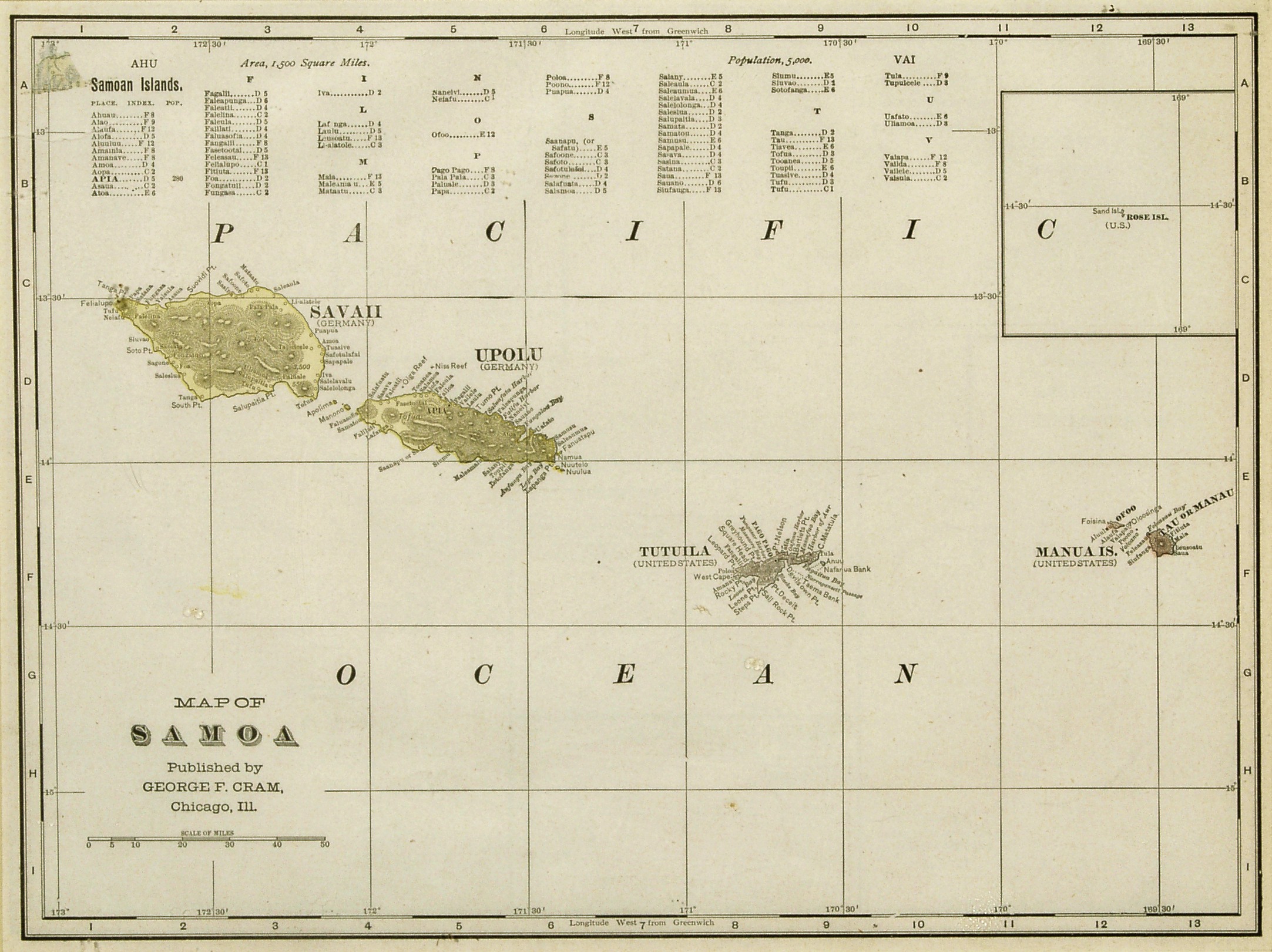
Western Samoa and American Samoa are side by side islands in the Pacific. When the Spanish Flu arrived in 1918, one would instigate a quarantine while the other had a trading community that did not want to stop trade. American Samoa survived the Spanish Flu without a death. Western Samoa kept trading and lost a quarter of the population.
In 1918 the Samoan archipelago was split between American Samoa (a United States territory) and Western Samoa (previously a German colony but under New Zealand governance from 1914). The 1918 influenza pandemic killed a quarter of Western Samoans, while leaving American Samoa unscathed.
The dangers of ship-borne disease were well known, and exclusion of many diseases, especially plague, had been implemented since the imposition of colonial governance nineteen years before.
On 30 October 1918 the Union Steamship Company’s Talune left Auckland for its run through Polynesia… The new, more lethal influenza variant had arrived in Auckland with the spring, and several crew members were ill.
Western Samoa was a German colony that had three times as many foreign ships visiting as American Samoa which was a semi-neglected military base. Western Samoa had been handed over to New Zealand management. But when the Talune arrived the sailors that were sick hid their illness (captains orders). The Governor of Western Samoa, Colonel Logan, hadn’t been warned of the new Flu, the traders didn’t want a quarantine, and Logan decided to wait for orders. American Samoa was a military base, and it was easy to set up quarantine.
To officials in Washington, American Samoa was a naval station with an incidental indigenous population. There was scant need for traders to maintain a permanent presence in the colony and no effort to attract settlers. This facilitated the American Governor’s use of quarantine: the absence of a trader community allowed General Poyer to impose measures without resistance, and the small number of ships visiting Pago Pago made such an effort manageable. When descriptions of the flu reached Poyer, he acted decisively. Quarantine was established, and implemented under the leadership of traditional chiefs. With modifications, the quarantine in American Samoa continued, with no fatal cases of influenza reported, until late 1921.
In contrast, Western Samoa suffered the highest known mortality of any state during the 1918-1921 pandemic. At least 24 percent of the population died, and most who died were between 18-50 years of age. Half of the most productive age cohort of Western Samoa, and the chiefly and religious elites, died. Western Samoa collapsed.
It was a “bungle that amounts to a crime”. The rampant influenza in New Zealand should have been noted in the ships “bill of health”. It was a reportable disease by the time the ship arrived in Western Samoa.
Even though the virus will arrive eventurally, despite the best efforts, the delay by quarantine is very useful. It’s a general rule of infectious diseases that viruses often mutate and become more infectious but less deadly with time. Natural selection naturally selects the more “fertile” virus, not the one that kills the host in 24 hours before they can spread it to Aunt Martha and her six kids.
… there may be some benefit to keeping the virus out for as long as is possible. American Samoa implemented a five-day quarantine for all boats that kept influenza from its shores until 1920. When it finally did arrive, the virus appears to have lost much of its sting and there were no deaths attributed to influenza in a population of more than 8,000. The main island of Samoa to the northwest, however, lost around a fifth of its population to the pandemic.
Gray looked at all the pockets in the US that escaped the worst of the Flu:
“These communities basically shut themselves down,” explains Howard Markel, an epidemiological historian at the University of Michigan who was one of the authors of the study. “No one came in and no one came out. Schools were closed and there were no public gatherings. We came up with the term ‘protective sequestration’, where a defined and healthy group of people are shielded from the risk of infection from outsiders.”
The people of Gunnison managed this by erecting guarded barricades on the main highways in and out of the surrounding county. Railway passengers were forced to submit to two days of quarantine upon arrival.
Tasmania had a quarantine too
A similar story unfolded on the on the Australian island of Tasmania, which implemented strict quarantine measures for boats arriving on its shores that required all passengers and crew to be isolated for seven days. When the infection penetrated the island in August 1919, medical officers reported that it was a milder infection than that on the mainland. The death rate on Tasmania was one of the lowest recorded worldwide.
Villagers in Barrow and Wainwright in north Alaska posted armed guards around their villages and travel between settlements was prohibited. When scientists tested people living in a number of remote settlements in north Alaska, they found they too were free of antibodies, suggesting they had never been exposed.
It appears that many of these villages were given advanced warning of the oncoming virus as it spread across Alaska by dog sled teams that raced ahead of the infection to alert villages. It was an incredible gamble – mail delivery teams and seal hunters moving through the region were already spreading the virus from settlement to settlement – but one that paid off.
Delaying an infection has other benefits too. It can help spread the peak, thus making resources more available. There are around 2,000 ICU beds in toto in Australia, that’s about 1 bed per 12,000 people. The high Ro infections (which rise and fall the fastest) will be bad news if they are also nastier germs and a high proportion of people need an ICU bed. The system gets overwhelmed.
Remember those exponential curves are so unforgiving. If CoronaVirus has a 6 day doubling period, without any quarantine China is potentially only three months away from having 300 million cases. Officially some 12% or so get the severe form. In the Lancet study 29% got acute respiratory distress syndrome.
Watching those CoV numbers (not the Chinese ones so much as all the other nations.) The good news is that in the Western world the numbers don’t seem to be growing rapidly. We are only 5 days in from stopping the flights, but that’s getting close to the average incubation period. The few new cases in Australia and the US still seem to have come direct from China or through a close relative.
Ooh. Are these the real figures? Is someone on the inside trying to leak out the truth?
There are claims tonight that a flickering set of figures have appeared that are much higher than the official tolls. These ghostly statistics have appeared three times then switched to the much lower official tally. But each time they grow — almost as if there are two sets of data, one for officials, and one for the public.
Ominously, the flickering death tally was 80 times higher than the official one. The infections were ten times higher. If it’s true the death rate may be far worse than the 2% bandied about.
If they are real, this changes everything. If they are fake, who or what would benefit? A glitch?
From Tyler Durden, ZeroHedge, and the Taiwan Times, h/t David E.
Tencent briefly lists 154,023 infections and 24,589 deaths from Wuhan coronavirus
Taiwan Times
TAIPEI (Taiwan News) — As many experts question the veracity of China’s statistics for the Wuhan coronavirus outbreak, Tencent over the weekend seems to have inadvertently released what is potentially the actual number of infections and deaths, which were astronomically higher than official figures.
On late Saturday evening (Feb. 1), Tencent, on its webpage titled “Epidemic Situation Tracker”, showed confirmed cases of novel coronavirus (2019nCoV) in China as standing at 154,023, 10 times the official figure at the time. It listed the number of suspected cases as 79,808, four times the official figure.
The number of cured cases was only 269, well below the official number that day of 300. Most ominously, the death toll listed was 24,589, vastly higher than the 300 officially listed that day.
The image on the left below, shows the numbers that appeared briefly on Saturday. Beside it are the official figures that appeared soon after.
The odd glitch (left) the official figures (right) Columns: Confirmed cases, suspected cases, recovered, deaths.
Ten days ago, shortly after China first started reporting the cases and deaths associated with the coronavirus epidemic, a UK researcher predicted that over 250,000 Chinese would be infected with the virus by February 4. And while according to official Chinese data, the number of infections has indeed soared in the past two weeks, at just under 25,000 (and roughly 500 deaths), it is a far cry from this dismal prediction
On Jan 25th experts from the University of Hong Kong (HKU) estimated that the number of cases in Wuhan were as high as 44,000. So the larger viral infection figure would fit.
The ghost figures come from China’s Tencent — one of the largest video game tech companies in the world. It has a webpage “Epidemic Situation Tracker”. Late on Saturday night briefly it listed the number of suspected cases as 79,808 when the official figure was about one quarter of that.
Ominously, the figure for deaths was 24,589 which reverted back to 304 soon after.
2019-nCoV
This is not how a nation reacts to “the flu”
If this is true, it explains the incredible images coming out of China — of deserted streets, armed patrols, people forcibly boarding up apartments to stop others from leaving, and of forced evictions. Hazmat suited people can be seen coming to take patients away who really really don’t want to go and who are being dragged into ambulances. It explains why the communist government suddenly launched into building new pop up hospitals, and it explains the images of hundreds of beds, in row upon row in town halls and large buildings.
Perhaps it even explains why the position of leaders like Trump and then Scott Morrison suddenly took such decisive action on Saturday. If there were spies on the inside reporting out, perhaps a few key leaders were informed things were were worse than they seemed.
Probably, the spies only needed to be watching #coronavirus on twitter.
(These should show images and movies, if not, try another browser).
#Coronavirus Wuhan starts to disinfect in the night! The question is how long the virus is gonna survive in the air and attaching to objects? It will be horrible if it can survive a long time in the air! pic.twitter.com/mwn8DhtBD7
Wuhan is converting Hongshan Stadium and Wuhan International Conference & Exhibition Center into makeshift quarantine centers with 1,000 more beds to treat #coronavirus patients with less severe symptoms. pic.twitter.com/QNCl1aFujf — A Point News (@APointNews) February 4, 2020
video from #Wuhan resident @fiteray
look at how many corpses left in the corridor of local hospital
forget about the fast bulit new hospital
forget about the low death rate of #Coronavirus
forget about all propaganda from China
There are some truly awful things on #coronavirus. Animals being burned alive. People saying goodbye to loved ones who are medical workers as if it may be the last time they see them. People refusing to get their temperature taken and being beaten.
We are fortunate that numbers are not increasing in the West as fast as the 20% (whatever that means) increase daily that was officially stated in China. So far people appear to be suffering lower grade, and recoverable infections.
There is still the possibility that there are thousands of unrecorded infections in China where people recovered or didn’t even get sick — that could bring the death rate back down.
This week Chinese University of Hong Kong professor David Hui-Shu-choeng said the official tally could be the “tip of the iceberg” as it only reflected those who were in hospital.
“There are many community cases that remain undiagnosed – unlike in Hong Kong, where cases are more carefully handled, including the mild ones. Of the 15 confirmed cases [in Hong Kong], 10 of [the patients] didn’t even need to be put on oxygen,” Hui told the South China Morning Post
“So we’re talking about different denominators here. For an actual picture, one usually has to wait until after the outbreak settles for a general population, zero-prevalence study to be carried out – where blood tests would reflect the number of positive cases containing the antibody without presenting the symptoms,” Hui said.
Donald Trump’s State of the Union is being described as one of the best ever. It was a magnificent campaign speech. Even the LA Times calls it “a pretty effective one”. I don’t watch many political speeches, but this one could be a “how to” guide.
The dour faced white suits of the #Metoo look decidedly unAmerican and self centred when Trump announces great results for all their token mascots and they can’t even clap. Nancy Pelosi petulantly rips up the speech that Trump had to provide her with at 1:42:50. Some news services are trimming that bit off…
Trump shamelessly plugs his heroes and basks in their greatness. Rush Limbaugh gets a Presidential Medal of Honor. Buzz Aldrin singled out early at the start. (6:30)
“This year American Astronauts will go back to Space on American Rockets.”
This puts the Democrats in a tough spot. Through the first half of the speech, President Trump reeled off one item of good news after another: Record low unemployment! Lowest black unemployment ever! Lowest Hispanic unemployment ever! Rising wages, especially at the bottom! Median net worth skyrocketing! And so on. The Democrats greeted all of this with stony silence. When Trump announced that in the last three years, 10 million people have gotten off welfare, the Democrats looked as though they were ready to cry. …
The latest news coming out is mixed. The live map and latest count of 2019-nCoV shows 20,000 confirmed infections, 426 deaths, and most importantly, a spread to 28 countries. It’s slightly encouraging that there are no extra cases in Australia and good to hear 3 of the 12 have been sent home, declared “recovered”. However the incubation period since flights were closed is still only halfway to the average (of 5 – 6 days) so it’s too early to tell.
A South Korean has tested positive after visiting Thailand (not a good sign, but the statement didn’t “rule out China”). Japan has quarantined a whole cruise ship (like Italy did). One passenger came down with the virus in Hong Kong. The whole ship of 3700 is confined to rooms, awaiting test results. It’s reassuring that so many tests can be done. (Yay, Japan). Meanwhile door handles can carry the virus. Soap and hand sanitizer could help a lot.
On the plus side, one team in Thailand say they have treated one patient successfully with anti-virals. It’s only one case, but a nice thought. How big are those stockpiles? The other plus, is that summer may slow it down. Best case is this might be “like a new flu”. We just don’t know.
Statistics Feb 4th, 2020 Click to enlarge.
Worryingly there are reports of thirty year olds coming down with the severe form. Though again, this happens even with the normal flu. Another downer is that the latest Ro estimate appears to be around 4.0 much higher than the Flu. Meaning it may spread even faster. Though I’m skeptical as that’s calculated from Wuhan data, which is both “uncertain” and there is always the possibility that the Ro may be lower in different countries. For comparison the Flu causes around 300,000 to 600,000 deaths every year. The fear here, justifiably, is the death rate might be quite a lot higher. The next few weeks are very important.
There are no recorded cases in Africa yet, though that seems hard to believe given the large Chinese workforce. It’s still possible perhaps for the rich western nations to curb the spread domestically, but if this spreads to Africa, India (3 cases) etc, and possibly to animal populations too, it’s difficult to imagine how it will not become endemic. Most African airlines have stopped flights to China, though not Ethiopia (perhaps something to do with the Belt and Road debt trap and the man running the WHO?).
If Coronavirus takes hold in other nations, then flights to those, and not just China will need to be stopped to contain it. At that point the question becomes “is it worth it” — which depends of course on the death and incapacitation rate — something we still really have no idea of. There are reports from China both of people who just got the flu and recovered, suggesting that for most people and the young and healthy, it isn’t a major threat. But there are also reports of quick and unrecorded cremations, and we know the Communist party has been suppressing the bad news. Photos on twitter imply the army is being brought in. This virus appears to cause the full spectrum from asymptomatic to “needing ICU”.
The prospect is daunting. A pandemic — an ongoing epidemic on two or more continents… The Wuhan coronavirus is spreading more like influenza, which is highly transmissible, than like its slow-moving viral cousins, SARS and MERS, scientists have found.
“It’s very, very transmissible, and it almost certainly is going to be a pandemic,” said Dr. Anthony S. Fauci, director of the National Institute of Allergy and Infectious Disease. “But will it be catastrophic? I don’t know.”
Stopping the spread
For those wondering how the SARS and other potential pandemics were stopped — it takes laborious tracking of contacts, which is difficult with symptomless transmission. The response team must isolate high risk contacts, and sometimes even treat them with anti-virals or vaccinations (if we only had one) pre-emptively. Health workers need to wear Hazmat suits and also get the pre-emptive options. We have to ring fence every single outbreak — something we can do when there are very few cases, but quickly becomes impossible if enough infectious people walk through shopping malls and schools.
In this case, if the virus doesn’t cause a severe illness in all people, it will likely spread further and faster, as asymptomatic people don’t need to report to hospitals or even doctors, and may not realize they are spreading it. Only mass testing around a small caseload would solve that. On the other hand, if there is a significant pool of people who didn’t get sick, if we can figure out why, it may give us another treatment tool. And once many have recovered, there may be potential for antibodies against corona virus to be gathered. In the case of Ebola, the antibodies from recovered people seemed to be the only useful medicine at one point in the battle.
New hospital built in ten days: (*Works in Chrome, but not in Firefox)
FYI, The videos here don’t display in all forms of Firefox, but they do display in Chrome.
China’s 1st hospital for #coronavirus build in 10 days! Construction live-streamed online with 10 of millions viewers at anytime. PLA medical team already took over the facility. It will open tomorrow. pic.twitter.com/KfO7J0Moxj
CNN —Doctors in Thailand said they have successfully treated one Wuhan coronavirus patient with a combination of antiviral drugs, according to a briefing on Sunday from the Ministry of Health.
Dr. Kriangsak Atipornwanich, a doctor at Rajavithi Hospital in Bangkok, said he treated a 71-year-old female patient from China with a combination of drugs used in HIV and flu treatments. He said the patient had previously been treated with only anti-HIV drugs.
“I had treated a patient with severe condition, and the result has been very satisfactory. The patient’s condition has improved very quickly within 48 hours.
Divestment Snowflakes protesting at St Johns College Jan 30th
Students at St Johns College were protesting last week at the fossil fuel investments that help keep the College running. Even camping out in the quadrangle in the middle of winter:
Oxford students have occupied St. John’s College since Wednesday, demanding that the College divests its £8.1 million of disclosed investments in fossil fuel companies and all undisclosed fossil fuel investments from its £551 million endowments.
Dozens of students have set up camp in the front quad of St. John’s equipped with banners and placards, to demand that it takes the climate emergency seriously and measures to remove the social licence of fossil fuel companies.
As of Thursday afternoon, there are allegations that St. John’s College had disabled student’s room keys. Instead, they are allegedly doing manual Bod card checks, escorting students to and from their rooms, and are not allowing non-residents to enter the college. There are reports of students bringing protesters food as they have remained on the quad since yesterday.
A solidarity rally has been taking place outside the front gates of the College.
Professor Parker responded with a provocative offer. “I am not able to arrange any divestment at short notice,” he wrote. “But I can arrange for the gas central heating in college to be switched off with immediate effect. Please let me know if you support this proposal.”
One of the students wrote back and said he would present the proposal but he didn’t think Parker was being appropriately serious. Professor Parker responded to that note saying, “You are right that I am being provocative but I am provoking some clear thinking, I hope. It is all too easy to request others to do things that carry no personal cost to yourself. The question is whether you and others are prepared to make personal sacrifices to achieve the goals of environmental improvement (which I support as a goal).” The best part of the story is the response from the organizer of the protest:
Fergus Green, the organiser of the wider protest, who is studying for a master’s degree in physics and philosophy at Balliol College, said: “This is an inappropriate and flippant response by the bursar to what we were hoping would be a mature discussion. It’s January and it would be borderline dangerous to switch off the central heating.”
From the other side of the world comes this extraordinary collection of data that few in Australia seem aware of.
File this fact away: Satellite datasets show that in an average year 50 million hectares burns around Australia. In a quiet year, it’s only 20 million hectares, but in a busy year it gets close to 100 million hectares. A lot of this land area is in the far north and western part of the continent, which is hot and often arid. It’s not the same as the cool wet corner of South East Australia which has some of the tallest trees in the world. The fuel loads in the north are much lower (like the trees).
Some parts of the top end burn nearly 100%, year after year. It’s no accident that the awful devastation this year was not in the red hot firezone on the map below, but in the South East corner where less than 5% of the area burns each year. The rarely burnt is the risky zone where there is a 20 year build up of fuel. Some areas are on a 1 in 100 year rotation or even slower. There were places this year that a whole century of fuel went up to help make that stratospheric pyroconvective fire and deliver some leaves and ash to New Zealand. (Lucky them).
Mean annual area burned in Australia, Source Giglio et al 2013
So far this season the fires that gained so much attention around the world have burned around 10 18 million hectares, which is only a fifth 36% of the usual area burnt, though presumably that will increase after satellite data is analyzed and the rest of the fire season plays out.
Pasi Autio points out that ten years ago a researcher showed there was a link between a strong Indian Ocean Dipole and bad forest fires on the other side of Australia in New South Wales. This year the Indian Ocean Dipole was one of the strongest in the last 60 years, so the pattern repeats. Nothing to do with “climate change” and everything to do with natural cycles of drought and rainfall.
In terms of forest fires rather than all fires, from 2011 – 2016 about 20 million hectares still burned each year. About a third of that was planned burns, and two thirds was wildfire. Since this is so much higher than the rotation of planned burns in the national parks of NSW and Victoria that burnt this year, presumably these planned burns were either on private property or in arid zones. The definitions of forest can vary hugely, and in this case also includes vast areas around Kalgoorlie, the Eyre Peninsula, and some “forests” near Bourke and Cunnamulla.
Many thanks to Pasi Autio for collecting together the data and research that no one at the ABC bothered to collect, and no one at any other government institute seemed to issue a press release about. Below, he concludes this season is not outside the bounds of normal by most fire related statistics, though he is not analyzing economic loss, animal deaths, media frenzies or political point scoring. Most of which have been far above normal.
— Jo
_________________________________________
Australian bushfire season 2019-2020 – Severity, reasons and conclusions
All-in-all the bushfire season in Australia is not abnormal
Consider Australia to be a continent of fire.
Most ecosystems in Australia are ecologically adapted to the fire and will even require it
The only way to manage the fire hazards in Australia is to manage the fuel loads
Natural Indian Ocean Dipole events (and ENSO events) has and will have the effect on droughts in Australia
Hazardous volume of fuel loads together with abnormally positive Indian Ocean dipole and the associated drought are the prime reasons for extreme bushfire season in Southeast Australia and especially in New South Wales during this season
The Australian bushfire season of 2019-2020 is now the climate topic of the year – the severe bushfire season has caused more than 2000 houses to burn in the state of New South Wales (NSW) alone. At least 27 people have died and likely over 1 billion mammals, birds and reptiles has been lost (1).
According to wikipedia pages for the 2019-2020 bushfire season (2) 18.9 million hectares of land has been burned as of 14h of January. This sounds severe, but how large is the amount of burned land when comparing to the earlier seasons?
Annual burned area in Australia
There are sources to place this bushfire season in the context like the study by Giglio at al 2013 (3). The paper describes a fourth generation Global Fire Emissions Database (GFED4). This data set combines satellite records like the 500m MODIS burned area maps with active fire data from the Tropical Rainfall Measuring Mission (TRMM) Visible and Infrared Scanner (VIRS) and the Along-Track Scanning Radiometer (ATSR) family of sensors. The paper also provides burned area data for Australia and New Zealand (combined) for the years 1997-2011.
Luckily Louis Giglio and his team have continued to work and have created excellent source of all burned area and fire-based emissions datasets. MODIS Collection 6 (C6) MCD64A1 burned area dataset (4) provides satellite-based burned area data for all continents – and also for Australia.
The data and a great analysis tool are available at globalfiredata.org.The dataset provides burned area data for the years 1997-2016. It’s possible to select a continent or country and choose several options for the source data such as emission or burned area data.
Let’s start with burned area data for Australia:
Figure 1: Annual burned area in millions of hectares
Figure 1 shows the total burned area for each year between 1997 and 2016 in millions of hectares. Area burned every year was between 18.2 million hectares (2010) and 94.6 million hectares (2001). On average, the area burned during this time period was 52.9 million hectares. Since there is 769 million hectares of land in Australia, the area burned between 1997 and 2016 was 2.4 – 12.3 % of total land area – every year.
These figures seem very high, so let’s see were the bushfires typically happen. Giglio et al 2013 provides a view to that.
The WHO could have declared a state of emergency earlier. Instead it delayed the announcement, praised China’s transparency, and recommended countries allow planes potentially carrying a deadly virus continue to fly freely. The WHO waited until the 2019-nCoV virus had spread to 18 nations before declaring an emergency. Wasn’t it an emergency with the first foreign case or the first case of symptomless transmission?
Follow the chain, or rather the Belt and Road
The WHO Director General is Tedros Adhanom of Ethiopia. From 2012 – 2016 he served as Minister of Foreign Affairs in the one party government that rules Ethiopia. This is the same party that borrowed billions from China to build a railway line, then struggles to pay it back. In Africa, Ethiopia is the second largest debtor nation to China — owing $13 billion. As Foreign Minister Adhanom praised China for African loans, looks like he was the man to line them up. We also note that the one-party ruling party of Ethiopia is called the Tigrayan People’s Liberation Front which was once a Marxist Lenninist far left group — labels it dropped after the Soviet Union collapsed. (Thanks Maurice for these tips).
Suddenly there might be a reason why Tedros went out of his way to praise President Xi of China, even though medical experts were already warning that there were thousands more victims, that China was hiding the severity, and punishing its doctors for trying to warn people.
Last Thursday ABC News Australia was broadcasting some of the rapturous praise below. I didn’t hear one word about the Ethiopians debts or any potential conflict of interest. How was the ABC serving Australians by uncritically parroting the lines of the Ethiopian apologist for China without doing the basic research themselves? There were no hard questions from the BBC either which refers to the WHO as the “global health officials”.
Tedros Adhanom
Does the WHO Director General serve the world or China?
It’s rare in politics to hear such an abject extended grovelling rave:
…Tedros said it is admirable that the Chinese government has shown its solid political resolve and taken timely and effective measures in dealing with the epidemic.
President Xi’s personal guidance and deployment show his great leadership capability, Tedros said.
He said that China has released information in an open and transparent manner, identified the pathogen in a record-short time and shared the genetic sequence of the novel coronavirus in a timely manner with the WHO and other countries.
China’s measures are not only protecting its people, but also protecting the people in the whole world, he said.
Hailing the high speed and massive scale of China’s moves are rarely seen in the world, Tedros said it showed China’s efficiency and the advantages of China’s system. The experience of China is worth learning for other countries, he said, adding that he believes the measures China has taken will effectively control and finally prevail over the epidemic.
The WHO firmly supports China’s measures against the epidemic and stands ready to enhance cooperation with China and provide all necessary assistance, Tedros said. He said the WHO will make assessment based on science and facts, and opposes overreaction and groundless accusations.
The WHO speaks highly of China’s major role in and great contribution to the cause of global public health, and is ready to further conduct strategic cooperation with China, said Tedros.
Now ponder that Australia’s Chief Medical Officer — Prof Brendan Murphy — told us we should keep our borders open last week because the WHO advised it was better. The ABC didn’t ask him any hard questions on that either. Should we be getting advice from the former Ethiopian Foreign Minister of a government that borrowed billions from China?
Last Thursday Prof Murphy was explaining how there was no evidence of transmission from human to human “in this country” as if the virus touring downunder might not do the exact same kind of transmission as the Chinese one.
Protecting Australia amounted to teams jumping on planes with thermometers and brochures and hoping anyone who was infected, but didn’t know it, would be nice enough not to share their germs. It’s pathetic:
…every flight from China now is being met by border security officers who are going on the plane and distributing information to every passenger trying to identify any unwell passengers. The airlines are also required to identify any unwell passengers and if they are unwell, there’s a process of screening them. Every passenger on those flights from China is given an information sheet in Chinese and Mandarin, sorry, Mandarin and English and told to undertake, to watch themselves, and to contact their doctor or their emergency department should they develop symptoms over the following 14 days. In addition, because there are some people who could come from China via other countries, and other ports within 14 days, we are now making announcements in the arrivals halls of airports, again in English and Mandarin, pointing out that anyone who may have come from China from whatever flight or whatever port they’re on, pointing out the risks and identifying that there is printed material available for them to collect at the airport if they have come from China so that all of the people who may have come from China can get that information. Again, we have no evidence there’s a risk to the Australian public. There’s no human to human transmission that’s been identified in this country.
Australians are the masters of quarantine — we stop visitors with wooden sticks, but not novel diseases. Last week it was harder to bring in cut-flowers to Australia than to import a deadly new human virus with no known cure.
Sack Tedros Adhanom
There’s a petition to sack Tedros Adhanom which started last week and already has 135,000 signatures. Among his other achievements, by the way, he’s the man who appointed Robert Mugabe as the Goodwill Ambassador for the WHO.
Not only do we not need Tedros Adhanom, we don’t need the WHO, The UN, or The ABC and BBC either. None of them were serving Australians, Brits, or Americans, or even Ethiopians. How many will now succumb to Coronavirus that might have been saved?
We use cookies to ensure that we give you the best experience on our website. If you continue to use this site we will assume that you are happy with it.


 Print This Post | |
  bobl
bobl


 Follow Jo's Tweets






Recent Comments